
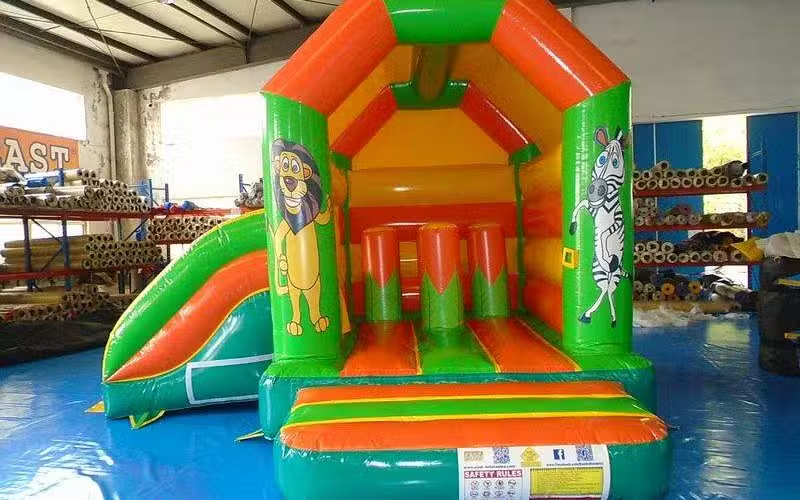
Buying a commercial inflatable for the UK market isn’t just about picking a theme and a size. If you’re purchasing for hire use, schools, councils, or event clients, the right questions protect you from common problems: compliance confusion, early wear, awkward setup logistics, and weak after-sales support.
Here are 7 questions UK buyers should ask before placing an order—written as a practical checklist you can use with any supplier.
Note: The fairest comparisons happen when you’re looking at similar size categories and similar lane lengths. Specs and packages can vary by model, so always confirm the details in writing.
1) “Is it built for UK commercial hire use, and what standard does it follow?”
In the UK, “commercial” should mean more than a marketing label. Ask what safety standard/spec the unit is built to (many UK buyers reference BS EN 14960 for inflatable play equipment) and what that means in real-world hire use.
A good answer should be clear and specific—not vague.
2) “What documentation will I receive with the inflatable?”
For hire operators, paperwork matters. Ask what arrives with the unit.
A solid package often includes:
- a user manual (setup, operation, supervision guidance)
- clear safety labeling (basic warnings and usage guidance)
- maintenance/inspection guidance
- warranty terms in writing
This reduces friction with venues and helps you operate more professionally.
3) “What material spec is used—and is it suitable for frequent hires?”
Material quality affects lifespan, cleaning, and abrasion resistance.
Ask about:
- PVC type/weight (and whether high-wear zones use heavier material)
- reinforcement layers at entrances, corners, and landings
- flame-retardant material options if your venues or insurers require it
If a supplier can’t explain material choices clearly, slow down.
4) “How are the seams built and reinforced in high-stress areas?”
Rental wear usually starts at stress points, not in the middle of a wall.
Ask how reinforcement is handled at:
- entrance step seams
- corners and base seams
- anchor tabs/webbing points
- zippers and deflation areas
- slide transitions and landing zones (for combos)
Look for specifics like double stitching and strengthened anchor points.
5) “How should it be anchored in real UK conditions?”
Anchoring is non-negotiable in hire. Ask about:
- the number and placement of anchor points
- staking guidance for grass/soil (where permitted)
- safe tie-down/weight solutions for hard surfaces
- weather and wind guidance (including when to stop)
A commercial supplier should provide a clear anchoring plan.
6) “What are the real logistics—weight, rolled size, blower needs, and crew size?”
Many first-time buyers focus on inflated size and forget transport and setup reality.
Ask for:
- unit weight and rolled dimensions
- blower quantity and recommended blower specs
- typical crew size for safe setup
- handling advice for tight-access venues
This prevents buying something that looks great on paper but is difficult to run on busy weekends.
7) “What after-sales support do you offer—spares, repairs, and response time?”
Support matters over a full season of hires.
Ask:
- what spare parts are available (patches, webbing, zips, netting sections, etc.)
- whether repair guidance is provided (photos/videos/instructions)
- how warranty claims work in practice
- typical response times during peak season
A supplier that supports you well keeps your unit earning rather than sitting out of service.
Final takeaway
If a supplier can answer these seven questions clearly, you’ll avoid the most common mistakes: unclear specs, weak reinforcement, confusing anchoring advice, and limited support.
For a practical comparison, line up similar UK-ready models and spec sheets, then use the checklist above to confirm the exact build, package, lead time, and support in writing before you commit.